Innovations in Isolated DC DC Converter Technology Driving Industry Standards
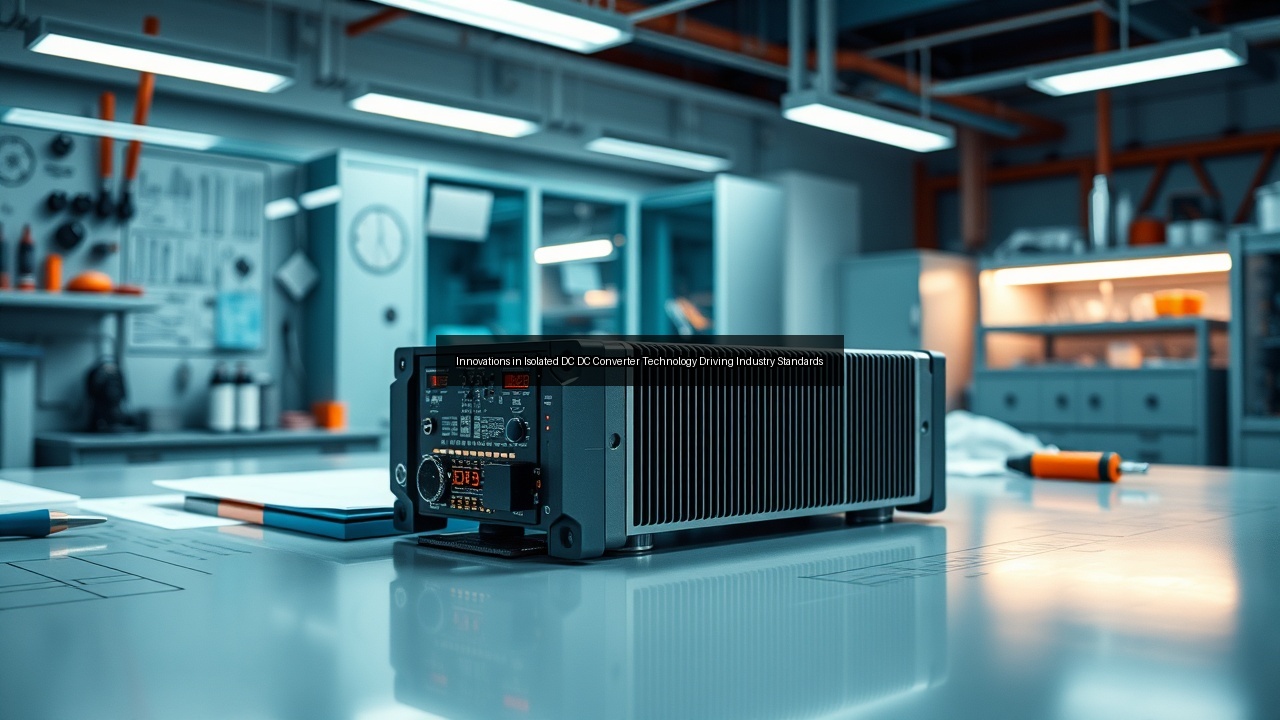
Understanding Isolated DC-DC Converters
What is an Isolated DC-DC Converter?
An isolated DC-DC converter serves as a crucial device in power supply systems, converting one DC voltage level to another while ensuring electrical isolation between input and output. This isolation is vital for protecting sensitive components and enhancing safety in various applications. Unlike non-isolated converters, isolated models employ transformers or other isolation techniques to separate the input circuit from the output circuit. This feature becomes particularly important in high-voltage power supplies, where safety and performance standards are paramount. An isolated DC-DC converter can efficiently transform voltage levels while minimizing noise and interference, making it a preferred choice in medical devices, telecommunications, and renewable energy applications.
Key Components of Isolated DC-DC Converters
Isolated DC-DC converters consist of several key components that work together to achieve efficient power conversion. The primary elements include the input capacitor, the transformer, switching devices (such as MOSFETs), output rectifiers, and filters. The input capacitor helps stabilize the input voltage, while the transformer plays a crucial role in providing isolation and voltage transformation. Switching devices enable rapid on-off control, facilitating efficient energy transfer. Output rectifiers convert the transformed AC voltage back to DC, and filters smooth the output waveform, ensuring a stable output voltage. Engineers design these components to work in harmony, optimizing performance in various applications, including DC-to-DC converters for electric vehicles and industrial power supplies.
Applications of Isolated DC-DC Converters in Power Supplies
Isolated DC-DC converters find extensive applications across multiple sectors, primarily due to their ability to ensure safety and reliability. In telecommunications, these converters provide stable power for communication equipment, ensuring uninterrupted service. In medical devices, they protect sensitive circuitry from high voltages while delivering consistent power, crucial for device functionality. Renewable energy systems, such as solar inverters, also leverage isolated DC-DC converters to manage power conversion from solar panels to usable electricity. Their role in power supplies extends to industrial automation, where they regulate power to control systems and sensors. The versatility of isolated DC-DC converters enables them to support a wide range of applications, from consumer electronics to high-end industrial solutions.
Innovations Driving Efficiency in Isolated DC-DC Converter Technology
Advancements in DC-DC Switching Techniques
Recent innovations in DC-DC switching techniques have significantly enhanced the performance of isolated DC-DC converters. Switching techniques like pulse width modulation (PWM) and resonant switching reduce energy losses during conversion, resulting in higher efficiency. Engineers are now implementing advanced modulation strategies that dynamically adjust switching frequency and duty cycle to optimize power conversion. These methods help minimize heat generation, which is crucial for compact designs in high-density applications. Moreover, adaptive control algorithms allow converters to respond swiftly to load variations, ensuring stable output voltage under changing conditions. As the demand for energy-efficient solutions grows, these advancements in switching techniques position isolated DC-DC converters as leaders in the power supply industry.
New Topologies for Enhanced Performance
Innovative topologies in isolated DC-DC converter design further drive efficiency and performance. Engineers are exploring various configurations such as flyback converters, forward converters, and push-pull converters, each offering unique benefits for specific applications. Flyback converters, for example, excel in low to medium power applications due to their simplicity and cost-effectiveness. In contrast, forward converters provide better efficiency at higher power levels, making them suitable for industrial power supplies. Additionally, the integration of multiple output channels within a single converter topology helps reduce system complexity and size. These advancements in topologies not only enhance performance but also support the growing trend towards miniaturization in electronic devices.
Integration of Buck and Boost Converters
The integration of buck and boost converters into isolated DC-DC converter designs allows for versatile voltage regulation options. Buck converters efficiently step down voltage, while boost converters increase voltage levels, making them invaluable in applications requiring specific voltage outputs. Combining these functionalities within a single isolated converter enables engineers to design systems that can adapt to various power requirements. This integration simplifies the design process, reduces component count, and decreases overall system cost. Furthermore, advancements in digital control have improved the responsiveness and accuracy of these converters, allowing for real-time adjustments to output voltage. As industries increasingly demand flexible power solutions, the integration of buck and boost capabilities enhances the appeal of isolated DC-DC converters.
Impact on Industry Standards and Practices
Regulatory Standards for Isolated DC-DC Converters
Regulatory standards play a pivotal role in shaping the development and implementation of isolated DC-DC dc to dc converter converters. Standards from organizations like the Institute of Electrical and Electronics Engineers (IEEE) and Underwriters Laboratories (UL) establish performance benchmarks and safety requirements. Compliance with these standards ensures that isolated converters operate reliably under specified conditions, safeguarding both users and equipment. These regulations also drive manufacturers to innovate and enhance their designs to meet stringent efficiency and safety criteria. As the demand for energy-efficient solutions escalates, adherence to evolving regulatory standards ensures that isolated DC-DC converters remain competitive and aligned with industry best practices.
Comparison with Non-Isolated Converters
Isolated DC-DC converters provide distinct advantages over their non-isolated counterparts, particularly in terms of safety and performance. Non-isolated converters, while often simpler and more cost-effective, lack the electrical isolation that prevents potentially harmful voltage spikes from affecting sensitive components. This isolation feature makes isolated converters preferable in applications such as medical devices and high-voltage dc to dc converter power supplies, where safety is non-negotiable. Furthermore, isolated converters exhibit superior noise immunity, reducing interference in sensitive electronic circuits. While non-isolated converters can achieve high efficiency in specific applications, the comprehensive benefits of isolation often make isolated DC-DC converters the preferred choice for critical power supply needs.
Future Trends in DC-DC Converter Technology
The future of DC-DC converter technology, particularly in isolated designs, promises exciting advancements driven by emerging trends. The push for energy efficiency and sustainability will likely lead to the development of converters that not only meet but exceed current performance standards. Innovations in materials, such as wide bandgap semiconductors, will enable converters to operate at higher frequencies, resulting in smaller, more efficient designs. Additionally, the integration of artificial intelligence in power management systems will optimize performance in real-time, enhancing adaptability to varying loads. As industries continue to evolve, isolated DC-DC converters will play a critical role in powering the next generation of electronic devices, contributing to a more efficient and sustainable future.